
Sustainable CMF
Chris Lefteri Design x Adobe substance
© Adobe Inc. 2025 – All rights reserved
Our collaboration with Adobe Substance brought to life a collection of sustainable polymers, translated into the digital realm with precision and imagination.
The aim of this collaboration was to celebrate the plethora of sustainable polymer options available on the market today. With such a broad range comes a wealth of visual potentials. Gone are the days of sustainable materials only being available in brown and green. Material and manufacturing innovation in 2025 now allows us to celebrate sustainability in a joyful way leading to unique aesthetic and application possibilities across industries. In order to celebrate this new age of sustainability, we opted to create plastic composites with a strong sustainable story in 3D.
© Adobe Inc. 2025 – All rights reserved

© Adobe Inc. 2025 – All rights reserved
The Substance apps made it possible to do things that, due to practical constraints of the injection moulding process, would have been very difficult to evaluate to the same level in a physical way.
For instance, seeing in real time the percentage of bio-filler in a plastic being increased or decreased, viewing how different colour tones merge and interact with one another and finally how imperfections in recycled plastic flow when injected into the mould. With the substance tools the guesswork of what an effect will look like in real life becomes lessened.
As well customising the sustainability story and visual, we also wanted to explore how surface finish and form can be used as a secondary CMF design element, resulting in a layered, multi-dimensional effect. How for instance, does shifting from an ultra-matte surface texture to a high gloss finish change the look and feel of the base polymer? Might it even change how such a sustainable material is perceived? Alternatively, how might an in-mould linear geometric pattern look when added to an organic marbled base? With this level of customisation, the joy of material experimentation became available to all.
Natural stone fillers; Here we wanted to experiment with the percentage of natural stone fillers present in a bio-polymer. By increasing or decreasing the percentage, the intensity of the speckle is altered in real time. Finally, a high gloss surface finish shifts to an ultra-matte, before a linear micro texture is added in-mould.
Bio-based masterbatch colour added to a polymer; We wanted to explore how a bio-based masterbatch colour, often seen in muted pastel tones, can be added to a bio-based polymer. During injection moulding, these tones shift and merge to create a marbled finish. Finally, a dotted 3D pattern is added resulting in a layered multi-dimensional effect.

© Adobe Inc. 2025 – All rights reserved
Imperfect flow lines commonly seen with recycled polymers; Here we wanted to explore how flow lines, often seen as an imperfection and therefore something to avoid, can be embraced and celebrated as a unique tone on tone marbled aesthetic. By using the Adobe Substance software the user is able to see how the marbled pattern will shift and move, flowing from the injection point outward during the moulding process. Finally, we explore how an such an organic effect is enhanced with the addition of a linear 3D surface pattern.

© Adobe Inc. 2025 – All rights reserved
What emerges is a new material language—inviting designers to embed sustainable effects from the start. The full set—Flow Lines, Natural Dyes and Natural Stone Speckles—is available in the Adobe Substance 3D Assets library.
© Adobe Inc. 2025 – All rights reserved
Materials Brief
Get insights that matter
Subscribe to our newsletter for more curated perspectives on materials, design trends, and future-CMF thinking — delivered directly to your inbox.
We respect your privacy. By subscribing to this newsletter you consent to receive emails from Chris Lefteri Design.
Materials Deep Dive
Go beneath the surface. Our unique reports unpacks the stories, technologies, and strategies behind the materials shaping tomorrow’s design — from emerging CMF trends to unexpected applications. Featuring a foreword by Chris Lefteri, each edition offers original insight for designers, brands, and innovators ready to make smarter material choices.
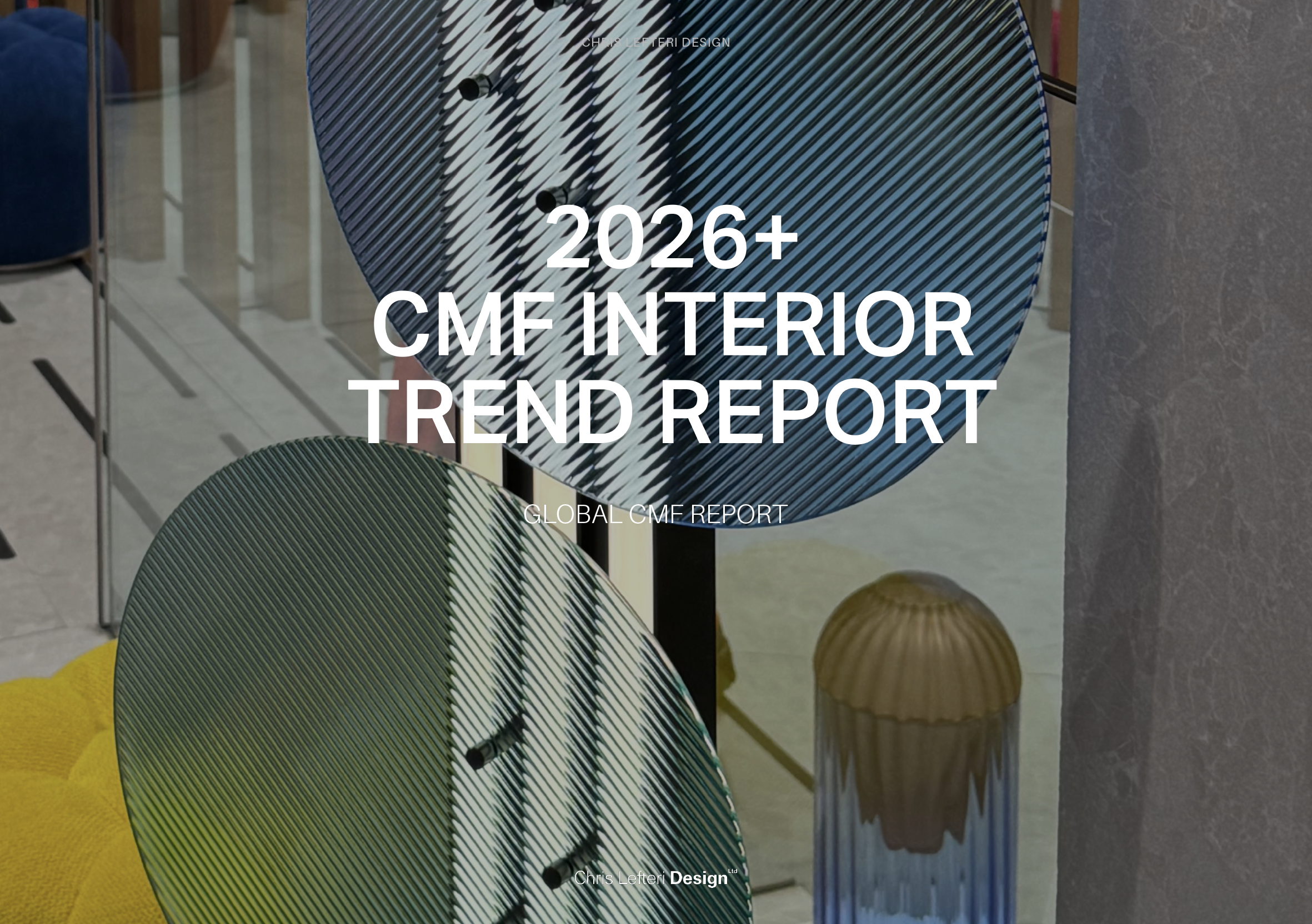
This report reveals the global Color, Materials, and Finishes (CMF) trends set to shape interiors, products, furniture, and home accessories in 2026 and beyond.
Inside, you’ll find:
Foreword by Chris Lefteri – exclusive insights into the future of CMF, drawn from his global consultancy experience and unique perspective on design innovation.
Global CMF Trends – an in-depth exploration of the evolving landscape of colors, materials, and finishes across multiple industries including interiors, products, furniture, and home accessories.
Material CMF Overview & Highlights – a curated library where each trend is brought to life through a signature material selected by the CMF team.
With a forward-thinking approach, this report delivers strategic insights for designers, architects, and industry professionals navigating the fast-changing world of interior and product design.
£ 500,00

With no sign of an end to the intense and heated debate around the use of leather, clear and balanced guidance on the environmental and ethical implications of this mainstay of the materials world is more important than ever. In this report, we examine potential approaches to the many challenges and opportunities related to leather:
Responsible finishes: Leather processing continues to be a source of pollution in many manufacturing hot spots around the world, but environmentally responsible alternatives are becoming the norm.
Progressive raw materials: A new generation of leather suppliers is re-evaluating raw materials that were previously rejected or ignored altogether.
Circular leather: Leather recycling is a growing industry that uses both post-industrial scrap and recovered post-consumer leather waste.
Synthetic biology: Several biotech startups are developing lab-grown leathers to avoid potential ethical and environmental implications related to the livestock industry.
Processing efficiency: AI and machine learning are new tools for addressing the inconsistencies that a natural material like leather inevitably presents in terms of colour, pattern, and irregularly shaped hides.
Beyond leather: From transparent and conductive leather to innovative building materials, hides unsuitable for leather production are finding new uses.
£ 500,00
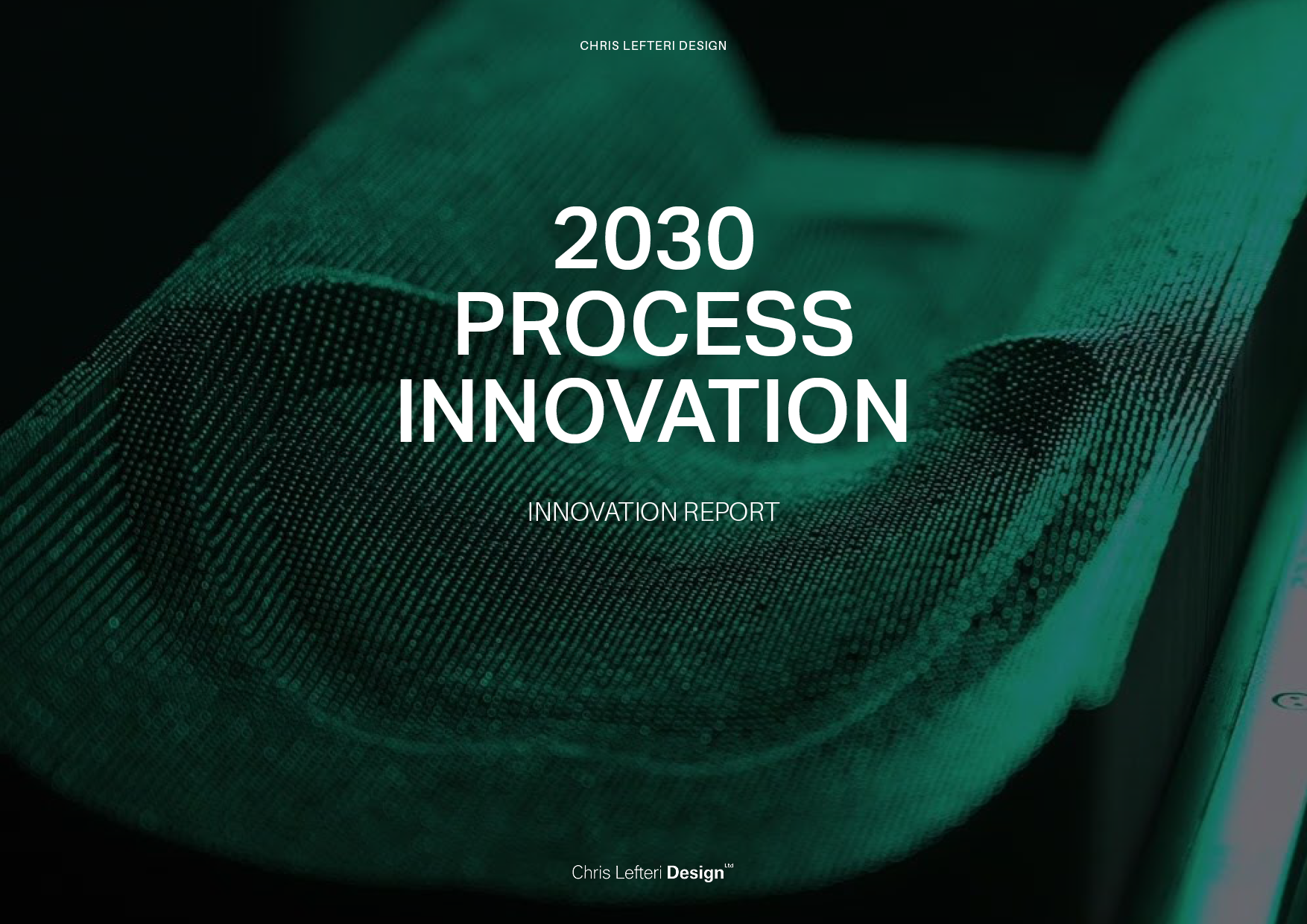
Unlocking Competitive Edge Through Smarter Making
In a world where environmental responsibility and cost-efficiency are no longer optional, process innovation emerges as a game-changer. As materials face tighter regulations and scrutiny, the often-overlooked realm of forming, finishing, and assembly holds untapped potential to transform how products are made.
This report invites you to rethink the manufacturing floor—not just as a place of production, but as a space of opportunity. By understanding and evolving the processes behind how things are formed, joined, and finished, brands can unlock higher yields, reduced waste, and sharper competitiveness. Whether it’s fine-tuning the familiar—like injection moulding or casting—or embracing the transformative power of AI, machine learning, and autonomous systems, the potential to innovate has never been greater.
The future of making is already here.
From incremental upgrades with minimal investment to bold, data-driven leaps, this report maps out how brands can take control of their environmental impact and manufacturing costs—today, and in the critical years leading to 2030.
£ 500,00